Every shipment that crosses an international border into or out of Cyprus must pass through customs. Whether you are a business importing raw materials from Asia, a company exporting finished goods to the Middle East, or an individual relocating to the island and bringing personal effects, the customs clearance process is a legal requirement — and it is rarely straightforward.
Disclaimer: Customs regulations and procedural requirements are subject to change. The information in this article reflects the rules in force as of early 2026 under the EU Union Customs Code (Regulation (EU) No 952/2013) and Cyprus Customs & Excise Department procedures. Always verify current requirements before making import or export decisions.
The EU Union Customs Code (UCC), which governs all customs procedures across EU member states including Cyprus, runs to hundreds of articles. The TARIC tariff database lists thousands of commodity codes, each with its own duty rate, VAT treatment, and potential licensing requirements. A single error on a customs declaration — an incorrect HS code, a missing document, or an undervalued consignment — can result in delays, financial penalties, or seizure of goods. This is precisely why importers and exporters in Cyprus rely on licensed customs brokers.
What Is a Customs Broker?
A customs broker — also referred to as a clearing agent or customs clearance agent — is a professional licensed to prepare and submit customs declarations on behalf of importers and exporters. In Cyprus and across the EU, customs brokers operate under the framework of the Union Customs Code, which establishes the legal basis for customs representation.
Under Article 18 of the UCC, a customs broker may act in one of two capacities:
- Direct representation: The broker acts in the name and on behalf of the importer or exporter. The legal responsibility for the declaration remains with the trader.
- Indirect representation: The broker acts in their own name but on behalf of the trader. In this case, the broker and the trader share joint and several liability for the accuracy of the declaration.
In practice, most customs brokers in Cyprus operate under direct representation, submitting declarations through the Cyprus Customs electronic systems (ICIS — the Integrated Customs Information System) on behalf of their clients.
Why Importers in Cyprus Use Customs Brokers
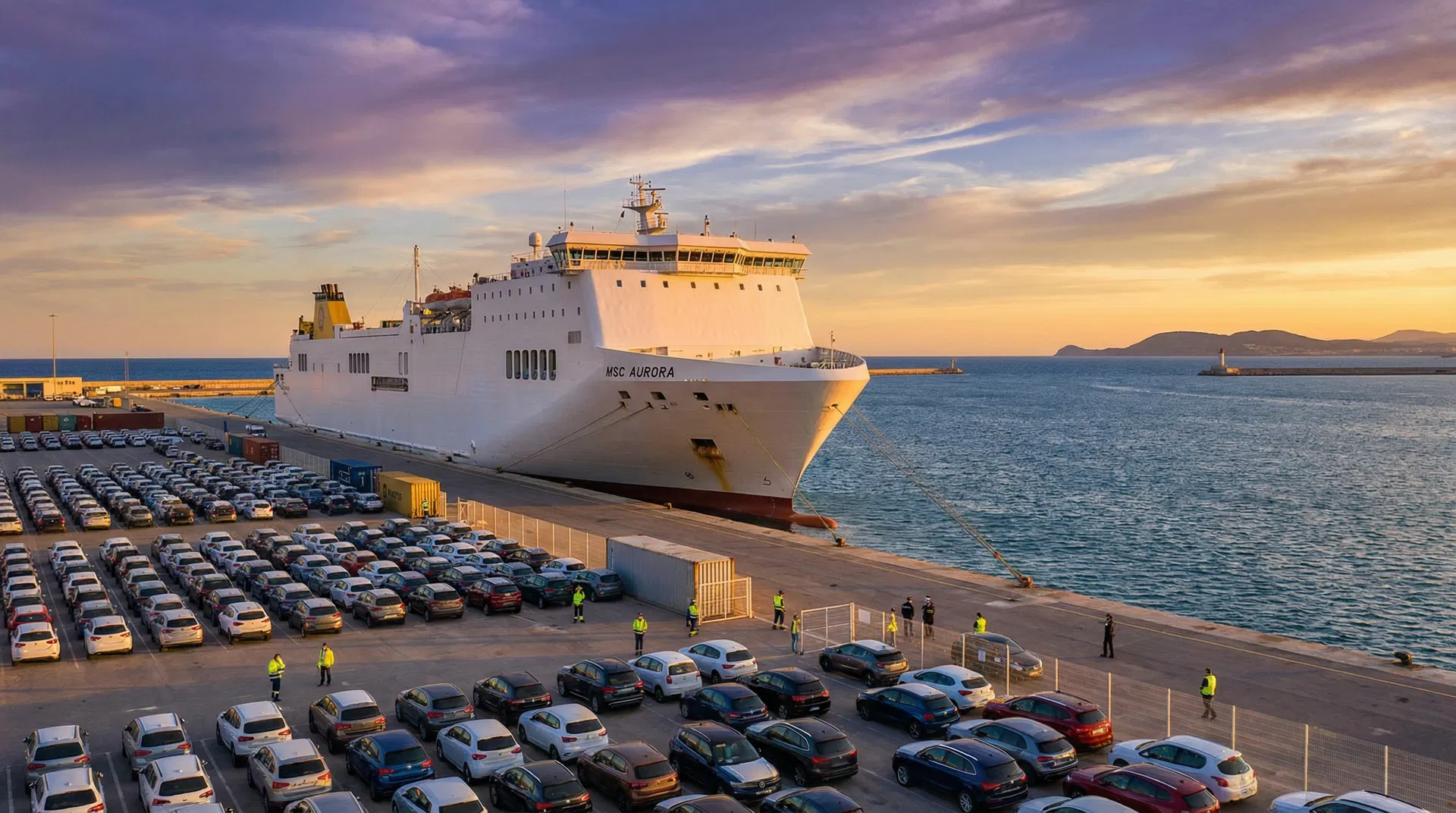
Cyprus occupies a strategically important position at the crossroads of Europe, Asia, and Africa. Limassol Port is the island's primary commercial port, handling container traffic, bulk cargo, and roll-on/roll-off (RoRo) vehicles. Larnaca International Airport handles air freight alongside passenger traffic. Both entry points are subject to full EU customs controls.
The practical complexity of customs clearance in Cyprus arises from several factors. Cyprus applies the EU Common Customs Tariff to goods imported from non-EU countries. Goods arriving from the UK are subject to the EU-UK Trade and Cooperation Agreement, which provides for zero tariffs on goods that meet rules of origin requirements — but the documentation requirements to claim this relief are precise and must be handled correctly.
Beyond tariff classification, importers must navigate VAT on imports (currently 19% in Cyprus), potential excise duties on specific goods, import licensing requirements for regulated products, and phytosanitary or veterinary controls for food, plants, and animals. A customs broker with deep knowledge of Cyprus procedures manages all of these requirements as a matter of routine.
Services Provided by Customs Brokers in Cyprus
A professional customs broker in Cyprus provides a comprehensive range of services that extend well beyond simply filing a declaration.
Tariff Classification and HS Code Determination. Every product imported into or exported from Cyprus must be classified under the Harmonised System (HS). The correct HS code determines the applicable duty rate, VAT treatment, and any trade policy measures such as anti-dumping duties or import quotas. A customs broker analyses the product's composition, function, and intended use to assign the correct code from the TARIC database.
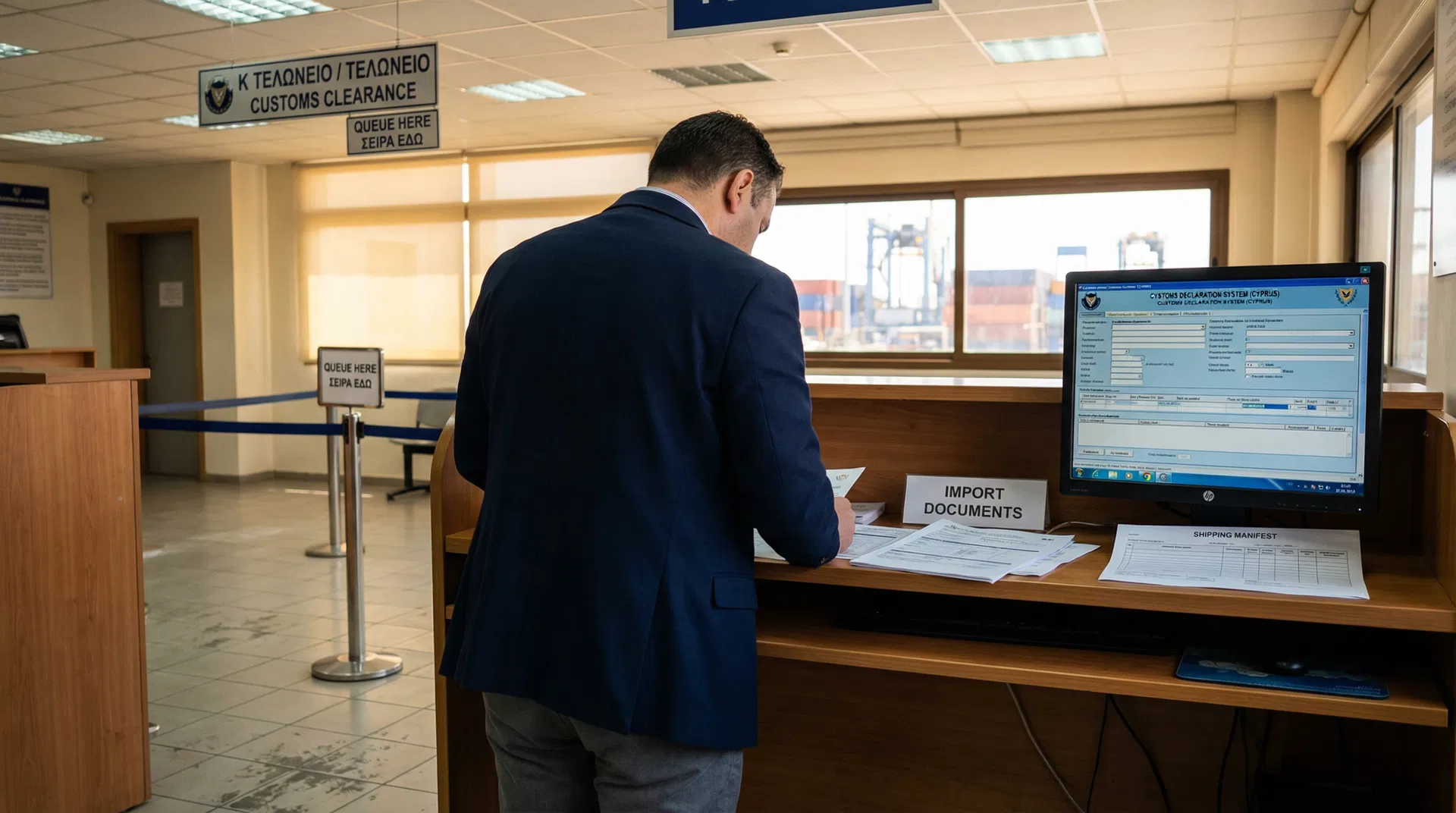
Customs Declaration Preparation and Submission. The AIS Declaration (Automated Import System) is the electronic customs declaration submitted through the Cyprus Customs AIS system. Customs brokers prepare and submit these declarations on behalf of their clients, ensuring all procedure codes, valuation methods, and supporting documents are correctly referenced in line with the EU Union Customs Code.
Customs Value Assessment. The customs value of imported goods is the basis on which import duty and VAT are calculated. Under the UCC, the primary method of valuation is the transaction value — the price actually paid or payable for the goods. Customs brokers ensure that the declared value is calculated correctly and supported by the required documentation, including commercial invoices, freight invoices, and insurance certificates.
Duty and Tax Calculation. Before goods are released from customs control, all applicable duties and taxes must be paid or secured. A customs broker calculates the total liability — import duty, VAT, and any other applicable charges — and advises the client on payment options, including the use of customs duty deferment accounts where available.
Document Management. Customs clearance requires a specific set of supporting documents, which vary depending on the nature of the goods, their origin, and the customs procedure being used. Standard documents include the commercial invoice, packing list, bill of lading or airway bill, certificate of origin, and any applicable licences or permits. Customs brokers manage the collection, verification, and submission of all required documents.
Liaison with Cyprus Customs & Excise Department. When goods are selected for physical examination, or when a customs authority raises queries about a declaration, the customs broker acts as the point of contact. This includes responding to requests for additional information, attending examinations, and resolving any discrepancies that arise.
Specialist Procedures. Beyond standard import and export declarations, customs brokers manage specialist procedures including Transit (T1 and T2 documents), Customs Warehousing, Inward Processing Relief, Outward Processing, and Temporary Admission.
When Do You Need a Customs Broker?
While it is legally possible for importers and exporters to submit their own customs declarations in Cyprus, the practical reality is that most businesses benefit significantly from professional representation. You are most likely to need a customs broker in the following situations:
- You are importing commercial goods from outside the EU for the first time and are unfamiliar with the declaration process.
- You are importing goods subject to licensing requirements, such as controlled substances, food products, or products of animal origin.
- You are importing goods under a preferential trade agreement and need to claim a reduced or zero duty rate.
- You are importing a vehicle — whether for personal use under Transfer of Residence relief or for commercial purposes. See our guide on how to import a car to Cyprus.
- You are importing goods from China or other Asian markets and need guidance on anti-dumping duties, rules of origin, and VAT treatment. Read our guide to importing from China to Cyprus.
- You are exporting goods and need export declarations, proof of export for VAT purposes, or assistance with export licensing.
Customs Broker vs Freight Forwarder
The terms "customs broker" and "freight forwarder" are sometimes used interchangeably, but they refer to distinct functions.
| Function | Customs Broker | Freight Forwarder |
|---|---|---|
| Customs declarations | ✓ Core service | Sometimes (if licensed) |
| Tariff classification | ✓ Core service | Rarely |
| Cargo booking & routing | Rarely | ✓ Core service |
| Bill of lading preparation | Rarely | ✓ Core service |
| Inland transport | Rarely | ✓ Core service |
| Cargo insurance | Rarely | ✓ Core service |
Many logistics companies in Cyprus — including P.Panagi & Sons Ltd — offer both services, acting as both freight forwarder and customs broker. This integrated approach simplifies the import and export process for clients, as the same team manages both the logistics and the customs compliance aspects of each shipment.
How to Choose a Customs Broker in Cyprus
Selecting the right customs broker is a significant business decision. The broker you appoint will have access to sensitive commercial information, will act on your behalf before a government authority, and will be responsible for the accuracy of declarations that carry legal and financial consequences.
Experience and specialisation. A broker with deep experience in your specific product category will be better placed to classify your goods correctly and identify any applicable licensing or control requirements.
Knowledge of relevant trade agreements. If you import goods from countries with which the EU has a preferential trade agreement — such as the UK, Japan, Canada, or countries in the Euro-Mediterranean Partnership — your broker should be familiar with the rules of origin requirements and the documentation needed to claim preferential rates.
Responsiveness and communication. Customs clearance is time-sensitive. Delays at the port or airport can result in demurrage charges, storage fees, and disruption to your supply chain. A good customs broker communicates proactively and responds quickly when issues arise.
Technology and electronic filing. All customs declarations in Cyprus are submitted electronically through the ICIS system. A professional broker will have established electronic connections with Cyprus Customs and will be able to provide clients with documentation and status updates in a timely manner.
Why Work With P.Panagi & Sons Ltd
P.Panagi & Sons Ltd has been providing customs clearance services in Cyprus for over 40 years. Based in Limassol, the firm handles clearances at Limassol Port, Larnaca Airport, and all other points of entry into Cyprus. The team has extensive experience with a wide range of goods — from commercial cargo and industrial equipment to personal vehicles and household effects — and is familiar with the full range of customs procedures available under the EU Union Customs Code.
Whether you are importing goods from China, clearing a vehicle at Limassol Port, or need guidance on any aspect of Cyprus customs procedures, the team at P.Panagi & Sons Ltd is available to assist. Contact us to discuss your customs clearance requirements.