Do You Need Customs Clearance to Export from Cyprus?
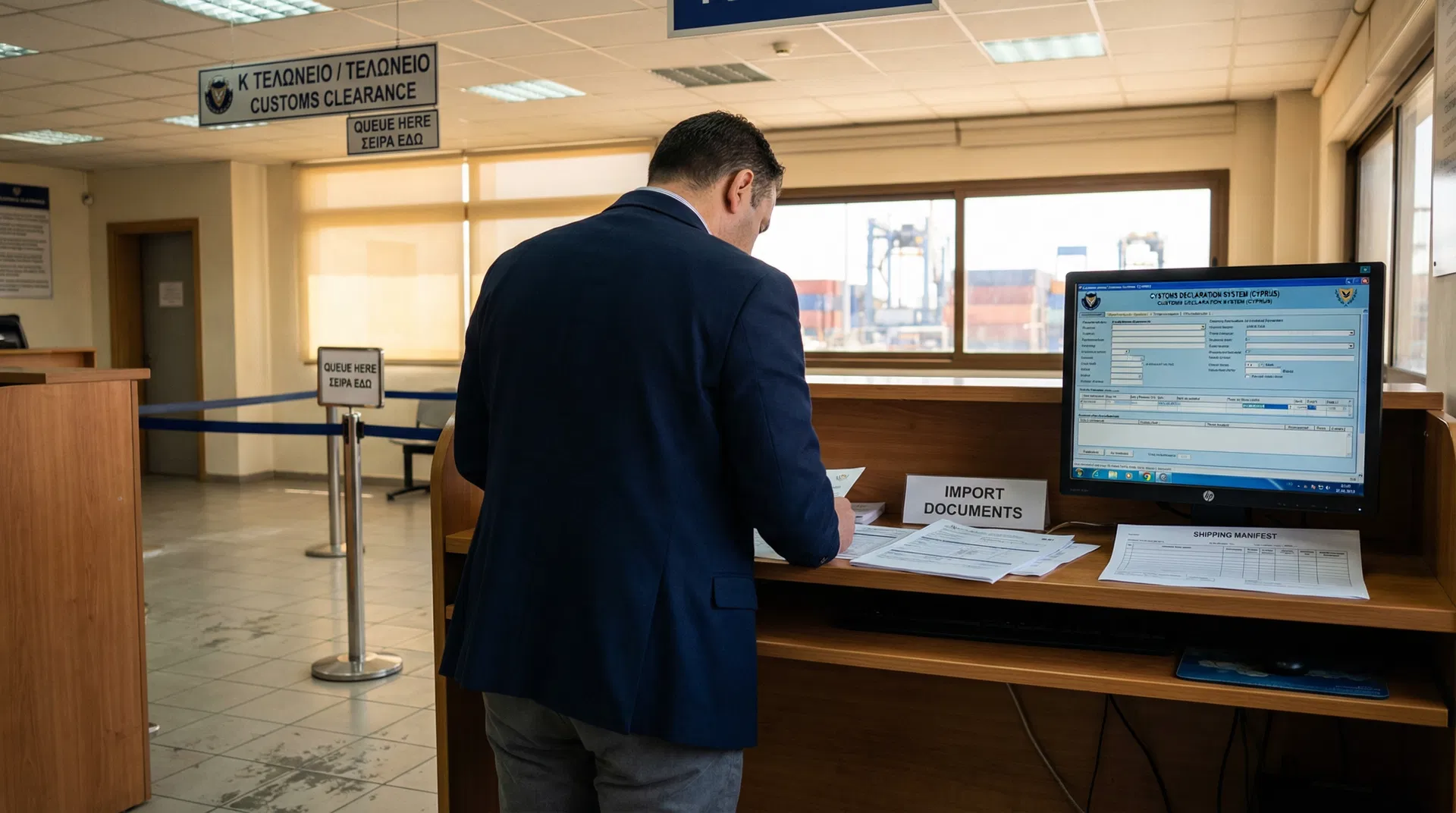
Cyprus is an EU member state. Exports to other EU countries (intra-Community supplies) do not require customs declarations, but do require an Intrastat/DEB declaration if the value exceeds the threshold. Exports to non-EU countries (third countries) — such as the UK, USA, Middle East, or Asia — require a full export customs declaration submitted electronically through the Cyprus Customs AIS system. This is where a licensed customs agent adds real value.
Step-by-Step Export Customs Process in Cyprus
- Classify your goods with the correct HS/TARIC code
- Prepare your commercial invoice, packing list, and bill of lading or airway bill
- Obtain an EORI number if you do not already have one
- Submit the export declaration electronically through the AIS system
- Customs releases the goods — you receive an Export Accompanying Document (EAD) with MRN reference
- Goods are loaded and shipped — keep the EAD as proof of export for VAT zero-rating
Documents Required for Export from Cyprus
- Commercial Invoice — seller, buyer, goods description, value, Incoterms
- Packing List
- Bill of Lading (sea) or Airway Bill (air)
- Export Declaration / EAD with MRN
- Certificate of Origin or EUR.1 Movement Certificate — if required by destination
- Export licence or permit — for restricted goods only (dual-use, military, CITES, etc.)
What is a EUR.1 Certificate and When Do You Need It?
A EUR.1 Movement Certificate is a preferential origin document. It proves that your goods originate in the EU, allowing the buyer in certain countries to benefit from reduced or zero import duties under EU trade agreements. It is issued by the Cyprus Customs & Excise Department. You typically need it when exporting to countries that have a Free Trade Agreement with the EU — such as Egypt, Lebanon, Jordan, Israel, and many others. Your customs agent applies for it on your behalf at the time of export.
Exporting from Limassol Port vs Larnaca Airport
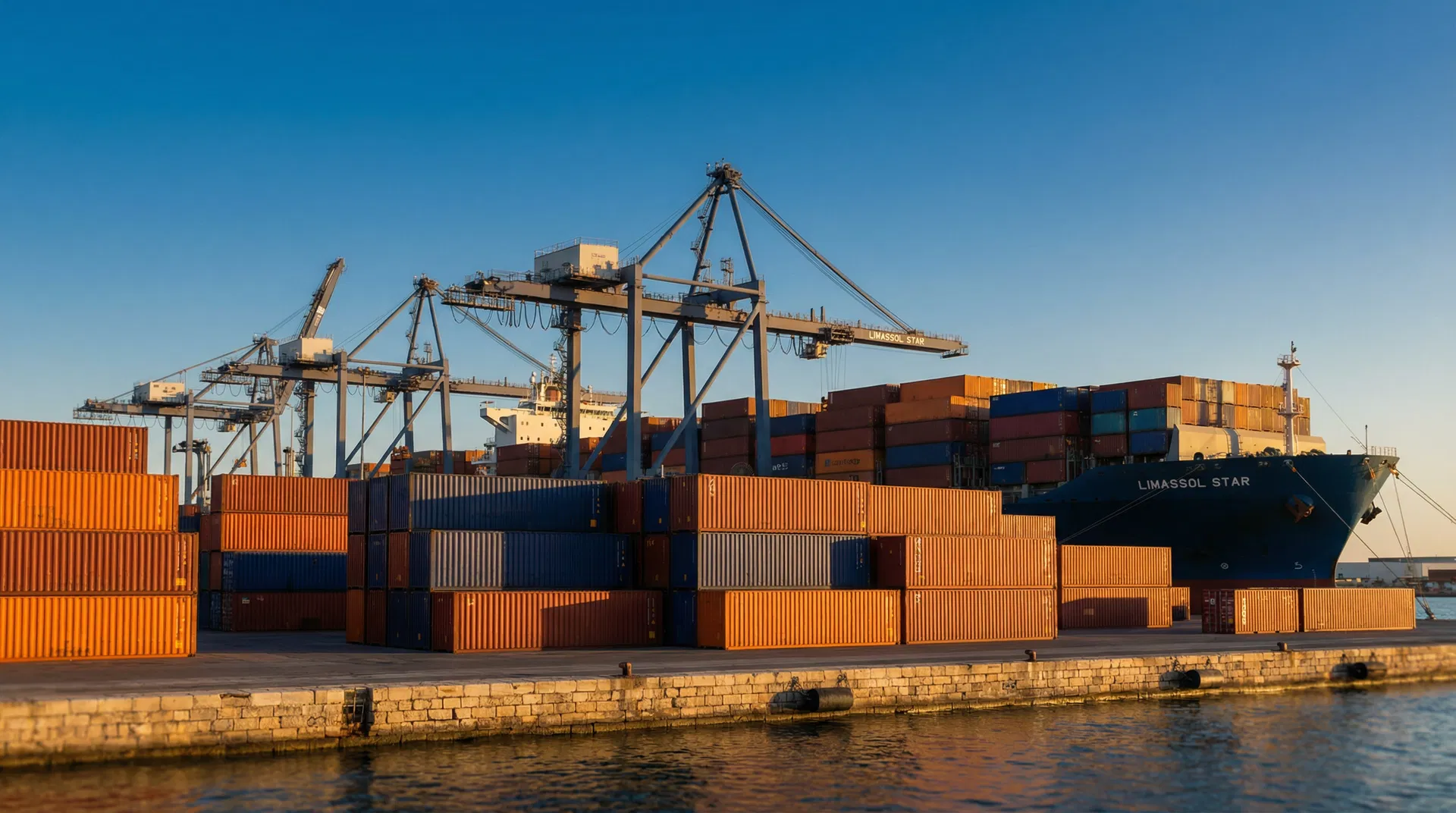
The process is the same regardless of port of exit, but the practicalities differ. Sea freight via Limassol Port suits bulk cargo, containers, vehicles, and heavy goods. Air freight via Larnaca Airport is faster and suited to high-value, time-sensitive, or lightweight shipments. P.Panagi & Sons handles export clearance at both Limassol Port and Larnaca Airport.
Common Export Mistakes to Avoid
- Wrong HS code — leads to incorrect duty treatment at destination
- Missing or incorrect commercial invoice — most common cause of delays
- Forgetting the EUR.1 certificate — cannot be issued after the goods have left Cyprus
- Not having an EORI number before the shipment date
- Undervaluing goods on the invoice — creates legal and VAT problems
How P.Panagi & Sons Can Help
We handle the full export customs process on your behalf — from HS classification and document preparation to AIS declaration submission, EUR.1 certificate applications, and coordination with your freight forwarder or shipping line. With over 40 years at Limassol Port, we know what destination customs authorities expect and how to get your shipment moving without delays.
Ready to Export from Cyprus?
Get in touch with our team for a fast, transparent quote on export customs clearance.